
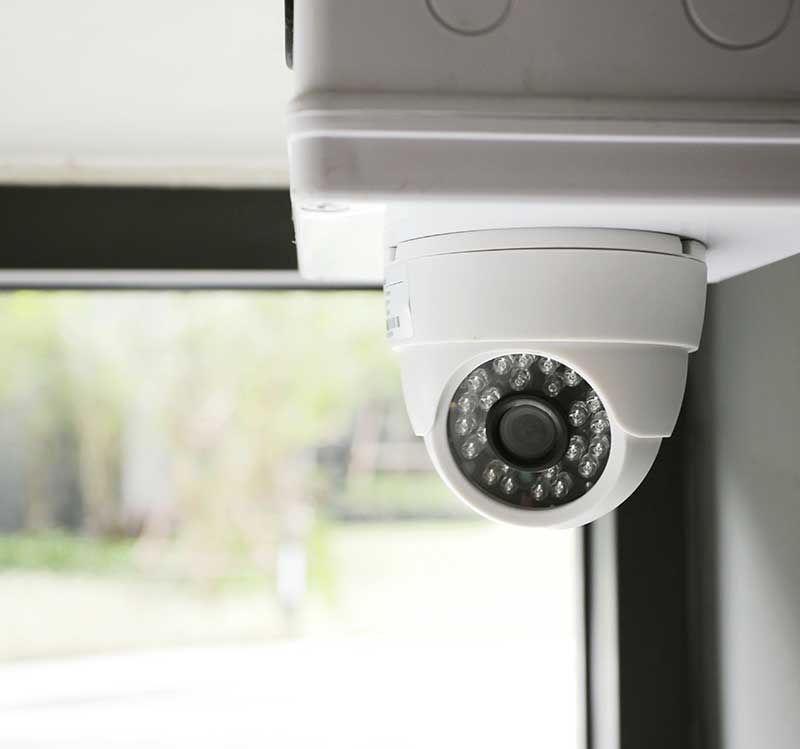
Walk into almost any home today and you’ll find at least one camera. Doorbells record deliveries. Backyard cameras watch over patios. Indoor cameras keep an eye on pets.
It’s easy to assume that cameras have replaced traditional alarm systems.
They haven’t.
In fact, the opposite is happening. The most effective home security setups today rely on alarm systems and cameras working together, not competing against each other.
Because while cameras are great at watching, alarm systems are built to act.
And in security, action is what matters.
The Shift Toward “Visibility-First” Security
Modern homeowners are drawn to cameras for one simple reason: visibility.
You can:
- Check your phone and see your front door in real time
- Review footage of a package delivery
- Get motion alerts when something moves
This creates a sense of control.
But visibility alone is not protection.
A camera can show you someone breaking in. It can record the event. It can even notify you.
What it cannot do on its own is:
- Stop the intrusion
- Trigger a loud deterrent
- Contact emergency services
That gap is where alarm systems still dominate.
What Alarm Systems Actually Do (That Cameras Don’t)
At its core, a security alarm system is designed to detect and respond to unauthorized entry.
That response is what separates it from a camera.
A modern alarm system includes:
- Door and window sensors that detect forced entry
- Motion detectors that identify unexpected movement
- High-decibel sirens that immediately disrupt an intruder
- Optional professional monitoring that can dispatch help
When a system is triggered, it creates pressure. Noise. Urgency.
And burglars don’t like any of those.
In fact, most break-ins happen quickly, often within minutes, and typically involve forced entry through doors or windows.
An alarm system is built specifically to interrupt that moment.
Cameras vs. Alarms: The Real Difference
The simplest way to understand it:
- Cameras observe
- Alarms intervene
Cameras provide:
- Visual evidence
- Remote access
- Awareness of activity
Alarm systems provide:
- Immediate deterrence
- Real-time response
- Escalation when something goes wrong
One documents the event.
The other tries to stop it from happening in the first place.
The Myth: “Cameras Are Enough”
This is where many homeowners get it wrong.
There’s a growing belief that a few well-placed cameras are all you need. And to be fair, cameras have come a long way. HD video, night vision, motion detection, mobile alerts.
But even the most advanced camera system still has a limitation:
It is reactive.
Even if you get an alert instantly, you are still:
- Opening your phone
- Trying to understand what’s happening
- Deciding what to do next
Meanwhile, the event is already in motion.
Without an alarm system, there is no automatic escalation.
No siren.
No immediate response layer.
Just footage.
Why Alarm Systems Still Matter More Than Ever
If anything, alarm systems are more relevant today because of how quickly modern break-ins can happen.
With the average burglary occurring in minutes, the window to react is small.
Alarm systems compress that response time to near zero.
The moment a door is forced or motion is detected:
- A siren sounds
- Alerts are triggered
- Monitoring (if enabled) can take over
That combination creates something cameras alone cannot:
Active deterrence.
And deterrence is what prevents loss in the first place.
Where Cameras Fit In (And Why You Still Need Them)
This is not an argument against cameras.
Cameras are essential. Just not sufficient.
They add:
- Context to events
- Evidence for law enforcement
- Visibility into daily activity
- Peace of mind when you’re away
They also act as a passive deterrent. People behave differently when they know they’re being recorded.
But cameras are strongest when paired with a system that can respond.
The Real Answer: Layered Security
The most effective home security systems today are layered.
That means combining:
- Entry sensors
- Motion detection
- Alarm response
- Cameras for visibility
- Smart controls and mobile access
This approach mirrors how modern security is designed across industries.
Not one device doing everything.
Multiple systems working together.
Even leading providers emphasize that combining cameras and alarms creates stronger deterrence and faster response than relying on either alone.
Because real security is not about seeing more.
It’s about reducing risk in real time.
What This Means for Homeowners Today
If you’re evaluating your home security setup, the question isn’t:
“Should I choose cameras or an alarm system?”
It’s:
“Where is my system weak?”
If you only have cameras, you’re missing response.
If you only have an alarm, you’re missing visibility.
The goal is balance.
A system that:
- Sees what’s happening
- Reacts immediately
- Keeps you informed
- Protects your home even when you’re not paying attention
Last Thoughts
Technology has made cameras more accessible than ever. But security has never been about access alone.
It’s about outcomes.
Cameras show you what happened.
Alarm systems help make sure it doesn’t.
And when both are working together, that’s when a home is truly protected.

- Why Businesses Are Integrating Cameras, Access Control, and Security Systems - March 30, 2026
- Why Alarm Systems Are Still Relevant in the Age of Cameras - March 15, 2026
- 2026 Home Security Trends: What Homeowners Should Expect - January 26, 2026